
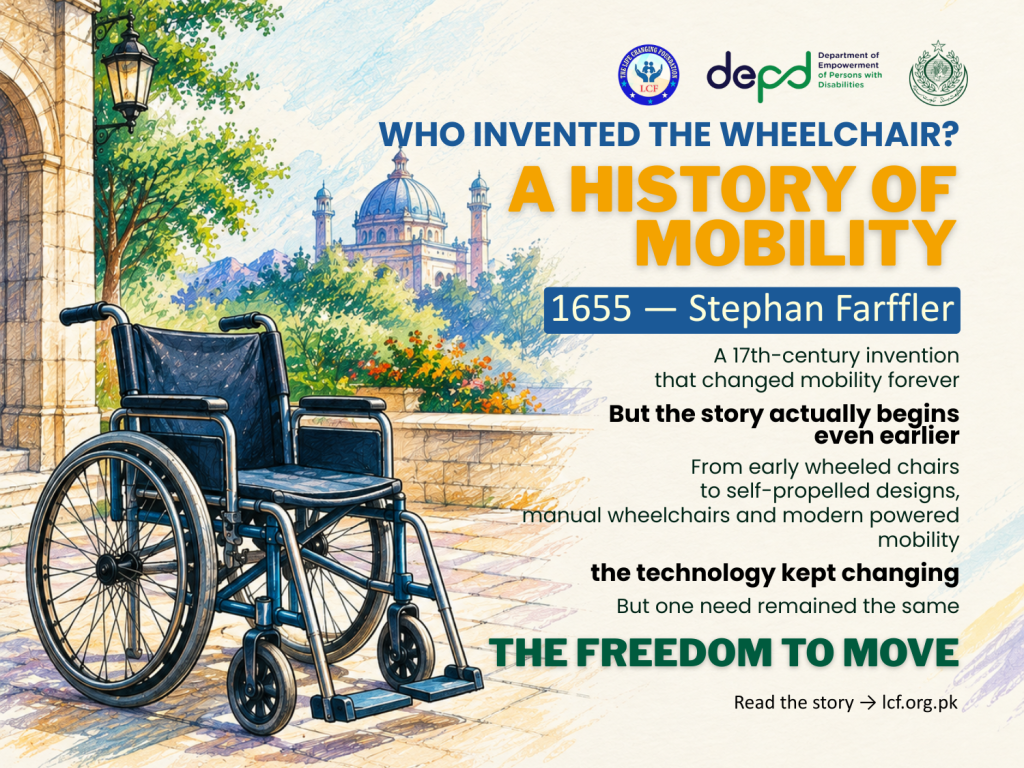
Who Invented the Wheelchair? The History, Evolution and Future of Mobility
A wheelchair may look like a simple mobility device today, but its story stretches back centuries.
From early wheeled chairs that required another person to push them, to self-propelled designs, folding wheelchairs, sports wheelchairs and today’s powered and digitally enabled mobility technologies, the wheelchair has continuously evolved around one fundamental human need:
The freedom to move.
But who invented the wheelchair? When did the first wheelchair appear? How did it become the modern mobility device we know today? And why does access to an appropriate wheelchair still matter so much?
The answer is not just a story of invention.
It is a story of innovation, independence, accessibility and human dignity.
Who Invented the Wheelchair?
There is no single inventor who can accurately be described as the inventor of the modern wheelchair.
The history of wheeled mobility goes back much further than the modern wheelchair. Historical evidence suggests that wheeled furniture and devices for transporting people existed centuries ago. One of the best-documented early examples is a wheeled chair created for King Philip II of Spain in 1595.
The chair had small wheels, arm and leg supports and an adjustable back, but it required another person to push it.
A major milestone came in 1655, when German watchmaker Stephan Farffler created a self-propelled mobility device.
Farffler, who had a physical disability affecting his legs, used his mechanical knowledge to build a three-wheeled device operated through hand cranks and gears. His design is widely regarded as one of the earliest self-propelled wheelchairs and represented an important shift:
The person using the device could help control their own movement.
That idea would become one of the most important principles in wheelchair development:
Mobility should support independence, not simply transportation.
The Wheelchair Before the Modern Wheelchair
The earliest designs were very different from the lightweight wheelchairs people use today.
Some early wheeled chairs were essentially mobile seats. They could provide a way to transport a person who could not walk, but they often depended on servants, attendants or other people for movement.
The 1595 chair associated with King Philip II is an important example. It provided mobility, but it was not independently propelled.
Farffler’s 1655 design introduced something different: self-propulsion.
Instead of asking only:
“How can we move a person?”
the technology began moving toward a more important question:
“How can the person move themselves?”
That change in thinking would influence the evolution of mobility technology for centuries.
How Did Wheelchairs Evolve?
The history of the wheelchair is really a history of continuous improvement.
Early Wheeled Chairs
Early devices focused primarily on transporting people who had difficulty walking.
Self-Propelled Designs
Farffler’s hand-crank mechanism demonstrated that a person could participate directly in propelling their own mobility device.
18th and 19th Century Designs
Over the following centuries, different wheelchair and invalid-carriage designs developed, including larger wheels that made self-propulsion more practical and designs intended for greater comfort and maneuverability.
Folding Wheelchairs
A major development came in the 20th century with folding wheelchair designs. The folding frame made wheelchairs considerably more practical for transportation and storage.
Modern Manual Wheelchairs
Modern manual wheelchairs became increasingly lighter, more maneuverable and more adaptable to individual users.
Powered Mobility
Electric and powered wheelchairs introduced another major transformation, allowing people with limited upper-body strength or other mobility limitations to control their movement through powered systems.
The evolution was never simply about making a better chair.
It was about creating better access to everyday life.
From a Chair to Assistive Technology
Today, a wheelchair should not be understood simply as a chair with wheels.
It is part of the much broader field of assistive technology.
According to the World Health Organization (WHO), assistive technology includes products and related systems and services that help people maintain or improve functioning, independence and participation. Examples include wheelchairs, prostheses, hearing aids, spectacles, white canes and other mobility, communication and self-care technologies.
This is an important shift in how we think about disability support.
A wheelchair can help a person:
- Move around their home
- Reach school or university
- Travel to work
- Participate in community activities
- Access healthcare
- Engage with family and society
- Reduce dependence on others
- Live with greater independence and dignity
In other words:
A wheelchair can be a pathway to participation.
How Modern Technology Is Changing Wheelchairs
Wheelchair innovation has not stopped.
Modern mobility technology increasingly focuses on individual needs, comfort, safety, accessibility and independence.
Depending on the user’s requirements, modern wheelchair technology can involve:
- Lightweight materials
- Adjustable seating and positioning
- Custom-fit components
- Powered mobility
- Advanced control systems
- Pressure-management solutions
- Specialized sports wheelchairs
- Mobility solutions for different environments
- Digital technologies that support assistive technology services
The wider assistive-technology sector is also becoming increasingly connected to digital innovation.
WHO has specifically highlighted the potential of digital technologies to improve access to assistive technology, while emphasizing the importance of research, innovation, product design, affordability and trained personnel.
So the future of mobility is not simply about building a faster wheelchair.
It is about creating more personalized, accessible and sustainable mobility solutions.
How Many People Need Assistive Technology?
The need for assistive technology is enormous.
WHO estimates that more than 2.5 billion people worldwide need one or more assistive products today. With ageing populations and increasing noncommunicable diseases, this number is projected to exceed 3.5 billion by 2050.
Wheelchairs are only one part of this much larger need.
WHO also estimates that approximately 80 million people worldwide are likely to require a wheelchair, with this number expected to grow as populations age and health conditions change.
Yet access remains unequal.
In some settings, access to assistive products can be as low as 3% of the need. Cost, availability, lack of information and limited trained services can all create barriers.
This means that developing assistive technology is only part of the solution.
People must also be able to access the right technology.
Why the Right Wheelchair Matters
Giving someone “a wheelchair” is not always enough.
A wheelchair needs to be appropriate for the person’s physical needs, environment and daily activities.
WHO’s wheelchair provision guidelines emphasize a people-centred process that can include assessment, fitting, training and follow-up. The goal is not simply to provide a device, but to provide an appropriate mobility solution that supports functioning, participation and inclusion.
This is particularly important for:
- Children
- Older people
- People with mobility disabilities
- People living with chronic health conditions
- People recovering from injuries
- People who need long-term mobility support
A suitable wheelchair can make everyday movement safer, more practical and more independent.
Wheelchairs and Assistive Technology in Pakistan
Pakistan has also taken important steps toward understanding the country’s unmet assistive-technology needs.
In 2021, Pakistan launched its first national Rapid Assistive Technology Assessment (rATA). The assessment covered 16 districts, more than 9,000 households and nearly 63,000 respondents to understand people’s needs and barriers related to assistive technology.
Pakistan has also been part of international efforts to strengthen wheelchair services and assistive-technology provision.
WHO’s wheelchair guidelines document examples from Pakistan, including work at the Paraplegic Centre Peshawar to strengthen wheelchair services, train personnel and develop mobility and postural-support capacity.
These developments highlight an important reality:
Assistive technology is not a luxury issue. It is an accessibility and inclusion issue.
Wheelchairs and Assistive Technology in Pakistan
Pakistan has also taken important steps toward understanding the country’s unmet assistive-technology needs.
In 2021, Pakistan launched its first national Rapid Assistive Technology Assessment (rATA). The assessment covered 16 districts, more than 9,000 households and nearly 63,000 respondents to understand people’s needs and barriers related to assistive technology.
Pakistan has also been part of international efforts to strengthen wheelchair services and assistive-technology provision.
WHO’s wheelchair guidelines document examples from Pakistan, including work at the Paraplegic Centre Peshawar to strengthen wheelchair services, train personnel and develop mobility and postural-support capacity.
These developments highlight an important reality:
Assistive technology is not a luxury issue. It is an accessibility and inclusion issue.
Why Mobility Matters Beyond Movement
It is easy to look at a wheelchair and see only a physical device.
But mobility affects much more than movement.
Imagine being unable to independently reach:
- Your classroom
- Your workplace
- A healthcare facility
- A market
- A community gathering
- Your own neighbourhood
When mobility barriers remain unresolved, they can become barriers to education, employment, healthcare, social participation and independence.
That is why WHO describes assistive technology as an important contributor to health, well-being, independence, inclusion and participation.
The real value of a wheelchair is therefore not measured only by its wheels, frame or price.
Its value can be measured by what it helps a person do.
Life-Changing Foundation: Supporting Mobility and Independence in Pakistan
This is where the history of wheelchair innovation connects with the work being done today.
Life-Changing Foundation (LCF) works with persons with disabilities and communities in Pakistan through disability support, rehabilitation, assistive-device access and other community-focused initiatives.
As part of its disability-support work, LCF has provided wheelchairs and other assistive devices to people who need mobility and functional support.
Its broader assistive-device work has included mobility and accessibility products such as:
- Wheelchairs
- Walkers
- Crutches
- Tricycles
- White canes
- CP chairs
- Commode chairs
- Hearing aids and other assistive devices
LCF’s work is connected to a broader goal:
not simply providing a device, but helping people move toward greater independence, dignity and participation.
This approach matters because assistive technology is most meaningful when it connects a person with the opportunities that mobility makes possible.
A wheelchair can help someone move.
But access, inclusion, rehabilitation and community support help turn mobility into participation.
From Historical Innovation to Human Impact
The story that began with early wheeled chairs has never really been about the chair.
It has always been about the person sitting in it.
In 1595, a wheeled chair helped King Philip II move when walking had become difficult.
In 1655, Stephan Farffler’s self-propelled design introduced a powerful idea: a person could participate in their own mobility.
Centuries later, wheelchair technology continues to evolve.
Today we have lighter materials, folding designs, powered mobility, customized seating and increasingly digital approaches to assistive technology.
But the fundamental goal remains remarkably consistent:
To help people move through the world with greater independence.
That is why wheelchair history is also a history of human innovation.
And that is why access to appropriate mobility technology remains important today.
What Does the Future of Wheelchair Mobility Look Like?
The future will likely focus on more than simply improving the physical design of wheelchairs.
The next generation of mobility solutions will increasingly need to consider:
Personalization
Different people have different bodies, environments and mobility goals.
Affordability
Innovation has little impact if the people who need it cannot access it.
Digital technology
Digital tools can support assessment, information, service delivery and access to assistive technology.
Better wheelchair services
Assessment, fitting, training and follow-up can improve the experience and outcomes of wheelchair users.
Inclusive communities
A wheelchair can provide mobility, but accessible buildings, roads, transport, education and workplaces are also essential.
The future of mobility therefore belongs not only to engineers and technology companies.
It also belongs to health professionals, governments, NGOs, communities, disability advocates, donors and—most importantly—people with disabilities themselves.
FAQ's
There is no single inventor of the modern wheelchair. One of the earliest well-documented wheeled chairs was created for King Philip II of Spain in 1595. In 1655, German watchmaker Stephan Farffler created a self-propelled mobility device that is widely regarded as one of the earliest self-propelled wheelchairs.
The answer depends on how “wheelchair” is defined. A well-documented wheeled chair was created for King Philip II in 1595, while Stephan Farffler's 1655 device is widely recognized as one of the earliest self-propelled wheelchair designs.
Stephan Farffler was a German watchmaker who created a self-propelled three-wheeled mobility device in 1655 using hand cranks and gears. His design is considered an important milestone in wheelchair history.
Wheelchairs evolved from early wheeled chairs that often required assistance into self-propelled, folding, lightweight, specialized and powered mobility solutions. Modern assistive technology can also incorporate digital systems and personalized services.
A wheelchair helps maintain or improve mobility and functioning. WHO classifies wheelchairs among assistive products designed to support independence, participation and well-being.
WHO estimates that more than 2.5 billion people currently need one or more assistive products, with the number expected to exceed 3.5 billion by 2050.
No. Wheelchair requirements vary according to an individual's physical condition, size, posture, environment, daily activities and mobility goals. WHO recommends people-centred wheelchair provision involving appropriate assessment, fitting, training and follow-up.
Access to appropriate mobility devices can support independence, education, employment, healthcare access and community participation. Pakistan has undertaken national work to assess unmet assistive-technology needs and barriers to access.
Life-Changing Foundation supports persons with disabilities through disability-focused initiatives that include rehabilitation and access to assistive devices. Its work has included providing wheelchairs and other mobility and assistive devices to people who need them.
Mobility Is More Than Movement
The history of the wheelchair began with a simple challenge:
How can a person who cannot walk move?
Centuries of innovation have produced increasingly sophisticated answers.
But the most important answer has never changed:
People deserve the opportunity to move, participate and live with dignity.
From the first wheeled chairs to modern assistive technology, the evolution of mobility reminds us that innovation is most meaningful when it improves human life.
And today, the work continues.
Because a wheelchair is not simply a chair.
It can be a way forward.